vascular surgeon
     
About Doctor
PVD
  Peripheral Arterial Disease
  Acute Limb Ischaemia
  Buerger's Disease
  Raynaud's Disease
Venous Disease
  Varicose Veins
  Sclerotherapy
  Endovenous Laser
  Ambulatory Phlebectomy
  Deep Vein Thrombosis
  Leg Ulcer
Carotid Artery Disease
Abdominal Aortic Aneurysms
Lymphoedema
Site Map
Contact Us
varicose veins peripheral vascular disease stenosis
deep vein thrombosis
PVD > Acute Limb Ischaemia

Effects of sudden arterial occlusion depends on state of collateral supply
Collateral supply in leg usually inadequate unless pre-existing occlusive disease

Aetiology

Embolism
 
Left atrium in patients in atrial fibrillation
Mural thrombus after myocardial infarct
Prosthetic and diseases heart valves
Aneurysm or atheromatous stenosis
Tumour, foreign body, paradoxical
Thrombosis
Other
Trauma
Dissecting aneurysm
Raynaud's Syndrome
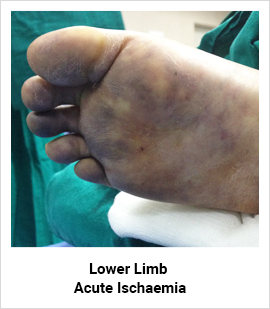
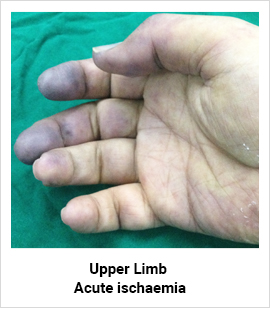
Acute Limb Ischaemia

Clinical Features

Clinical diagnosis depends on the 6 'p' s
 
Pain
Paraesthesia
Pallor
Pulselessness
Paralysis
Poikilothermia
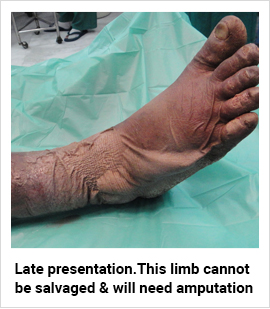
Fixed staining is a late sign
Objective sensory loss requires urgent treatment
Need to differentiate embolism from thrombosis
Important clinical features include:
 
Rapidity of onset of symptoms
Features of pre-existing chronic arterial disease
Potential source of embolus
State of pedal pulses in contralateral leg

Management

Initial

Heparinise & analgesia
Treat associated cardiac disease
Treatment options are:
 
Embolic disease - embolectomy or intra-arterial thrombolysis
Thrombotic disease - intra-arterial thrombolysis / angioplasty or bypass surgery

Emergency embolectomy


Can be performed under either general or local anaesthesia
Display and control arteries with slings
Transverse arteriotomy performed over common femoral artery
Fogarty balloon embolectomy catheters used to retrieve thrombus
If embolectomy fails - on-table angiogram and consider
Bypass graft or intraoperative thrombolysis

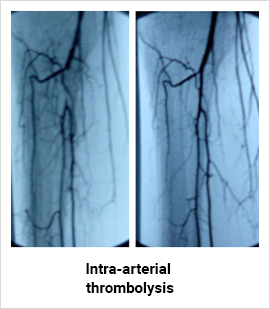
Intra-arterial thrombolysis

Deep Vein Thrombosis

Arteriogram and catheter advanced into thrombus
Streptokinase 5000u/hr + heparin 250u/hr
Alternative thrombolytic agents include urokinase or tissue plasminogen activator (TPA)
Repeat arteriogram at 6 -12 hours
Advance catheter and continue thrombolysis for 48 hours or until clot lysis
Success 60-70% but needs careful case selection
Not suitable if severe neuro-sensory deficit
Thrombolysis can be accelerated by:
 
Pulse spray through multiple side hole catheter
Aspiration thrombectomy - debulking thrombus aspiration
High dose over shorter time
Complications
Mortality of 1-2%
Bleeding - CVA, retroperitoneal

Dr. Pankaj Patel a vascular surgeon has expertise in peripheral vascular diseases, varicose veins and deep vein thrombosis

Site Designed and Hosted by Layout Galaxy