vascular surgeon
     
About Doctor
PVD
  Peripheral Arterial Disease
  Acute Limb Ischaemia
  Buerger's Disease
  Raynaud's Disease
Venous Disease
  Varicose Veins
  Sclerotherapy
  Endovenous Laser
  Ambulatory Phlebectomy
  Deep Vein Thrombosis
  Leg Ulcer
Carotid Artery Disease
Abdominal Aortic Aneurysms
Lymphoedema
Site Map
Contact Us
varicose veins peripheral vascular disease stenosis
deep vein thrombosis
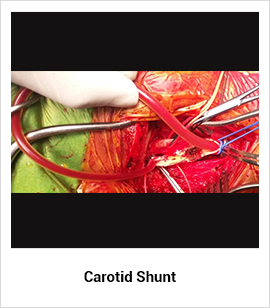
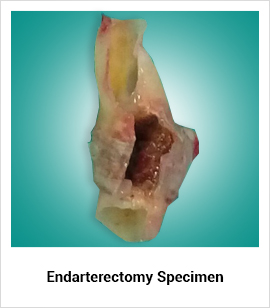
Carotid Artery Disease

Atherosclerosis is common at the bifurcation of the common carotid artery
Stenosis of the internal carotid artery is a potentially treatable cause of:
 
Ischaemic stroke
Transient ischaemic attack
Retinal infarction
A patient with an asymptomatic 50% carotid stenosis has 1-2% per year risk of a stroke
The risk of stroke increases with the degree of stenosis
Once a stenosis has become symptomatic the risk of a stroke is further increased
Once an ischaemic stroke has occurred the risk of further stroke is ~10% in the first year and ~5% in subsequent years

Assessment of stenosis

Carotid bruits are an unreliable guide to severity of stenosis
May be absent in patients with severe stenosis

Duplex ultrasound

Doppler recordings allow assessment of flow at stenosis
Also allows imaging of arterial anatomy

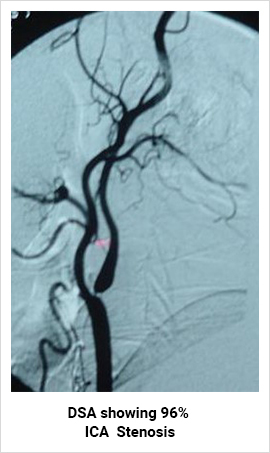
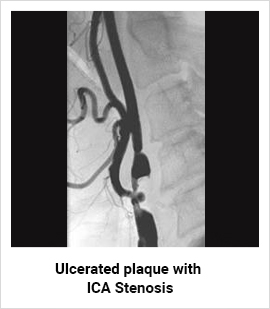
Carotid angiography

Intra-arterial angiography is the traditional method of assessing degree of stenosis
4% risk of inducing further neurological event

1% risk of permanent stroke

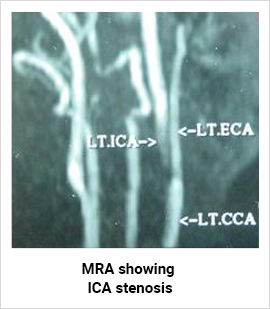
Magnetic resonance angiography

An increasingly used non-invasive technique

Some surgeons will operate on the basis of non-invasive assessments
Medical Management

Stop smoking
Pharmacological treatment of hypertension and diabetes
Prophylactic aspirin
 
Asprin prevents around 40 'vascular events' per 1000 patients treated for 3 years
It should be started at 175-150 mg daily once ischaemic stroke confirmed by CT
It should also be given to those with asymptomatic stenoses
The combination of aspirin and dipyridamole is no more effective than aspirin alone.

Surgery for asymptomatic stenosis

Asymptomatic Carotid Atherosclerosis Study

1662 patients with >60% reduction in luminal diameter
Randomised to either
 
Endarterectomy + medical treatment (aspirin 300 mg)
Medical treatment alone
Risk of ipsilateral stroke over 5 year period was reduced (5% vs. 11%) in surgery group
2.3% in surgery group had stroke within 30 days of surgery
0.4% in medical group had stroke in same time period
Overall, benefit for those with asymptomatic stenosis but only the presence of a low perioperative complication rate.

Surgery for symptomatic stenosis

Two large trials have been published

North American Symptomatic Carotid Endarterectomy Trial (NASCET)

Compared endarterectomy plus medical treatment in those patients with
Non-disabling stroke in 4-6 months prior to surgery
Severe (70-99%) ipsilateral stenosis
The risk of stroke or death over 2 years was reduced (9% vs. 26%) in surgery group
5.8% randomised to surgery had stroke within 30 days
Benefit also seen in those with >50% stenosis but not to same degree

European Carotid Surgery Trial (ECST)

ECST risk of stroke or death over 3 years was reduced (12% vs. 22%) in surgery group
7.5% randomised to surgery had stroke or died within 30 days of operation
In those with mild (0-30%) and moderate (30-60%) symptomatic stenoses there was benefit from surgery
Overall, In those with symptomatic stenoses
Best results are seen in those with more severe stenoses
Benefit only seen in institutions with low perioperative stroke and death rate
Surgery indicated in those with severe stenosis (>70%) that have recently become symptomatic
Operation should be performed by experienced surgeon
Centres should audit their results and have a perioperative stroke rate of <7%
Angina and hypertension should be well controlled pre-operatively
If patient selection is poor or complication rate high then there will be no benefit from surgery.

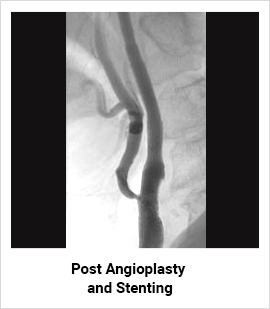
Carotid angioplasty

Angioplasty (± stent placement) is being used to dilate stenoses
No published randomised trials
In uncontrolled studies severe stenoses (>70%) have been dilated to <50%
Re-stenosis often occurs and a significant risk of stroke during the procedure

Dr. Pankaj Patel a vascular surgeon has expertise in peripheral vascular diseases, varicose veins and deep vein thrombosis